
Perdomo Builds One of North America’s Most Advanced Ultra High-Reach Demolition Fleets
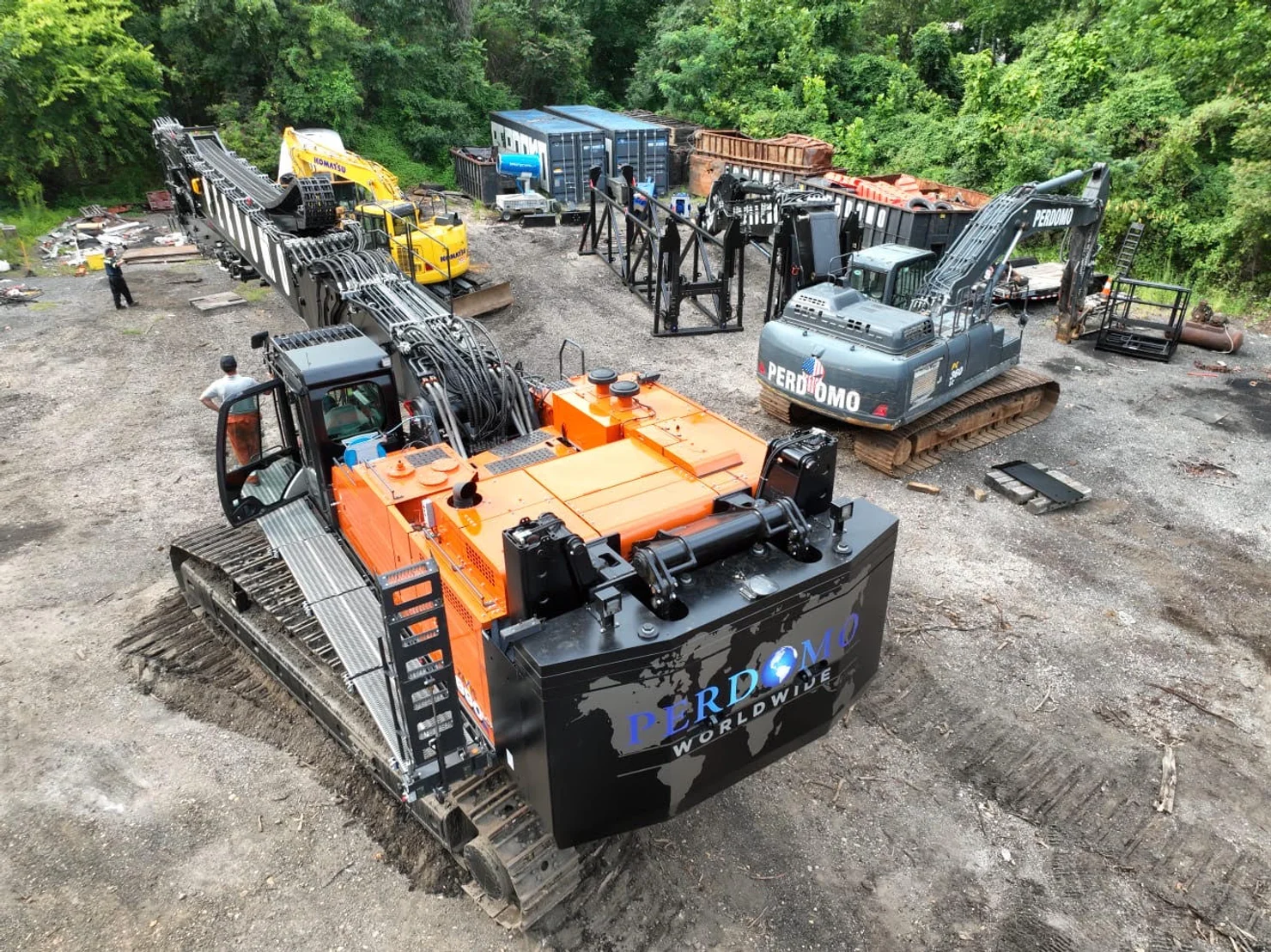
Perdomo is expanding its ultra-high-reach demolition capabilities through continued investment in advanced equipment designed to tackle some of the tallest and most complex structures in the industry. With nine active high-reach machines and two additional units in the acquisition process, Perdomo is building a next-generation demolition fleet that strengthens its ability to manage complex decommissioning, structural demolition, environmental remediation, and redevelopment projects.
The company’s expanding fleet incorporates advanced self-erecting technology, allowing specialized ultra-high-reach excavators to assemble and disassemble without requiring a separate crane. With planned additions capable of reaching between 195 and 265 feet, Perdomo is positioning itself to take on increasingly demanding industrial and high-rise demolition projects while improving the efficiency and coordination of the broader site transition process.
As property owners seek comprehensive solutions for aging industrial facilities and complex commercial properties, Perdomo continues to invest in the equipment, expertise, and integrated capabilities needed to move projects from facility decommissioning through demolition and toward future redevelopment.
What Is an Ultra-High-Reach Excavator?
An ultra-high-reach excavator is a specialized demolition machine engineered to dismantle tall structures from the top down. Equipped with an extended boom and specialized demolition attachments, these machines allow operators to systematically remove structural components at heights beyond the capabilities of conventional excavators.
For industrial decommissioning projects, this capability provides an important advantage. Before a property can be repositioned for new manufacturing, distribution, commercial use, or redevelopment, existing structures and obsolete infrastructure may need to be dismantled and removed. Ultra-high-reach equipment allows demolition teams to address large structures in a controlled sequence while coordinating debris processing, material separation, and site clearing.
Perdomo’s investment in self-erecting technology further enhances these capabilities. Integrated hydraulic jacks allow the machines to assemble and disassemble without relying on a separate crane for those operations.
The technology also offers logistical advantages. These configurations can be transported in approximately four to five tractor-trailer loads, compared with some conventional high-reach configurations that may require up to 11 loads. Reducing transportation requirements and eliminating the need for a separate assembly crane can simplify mobilization, reduce logistical complexity, and help accelerate the transition from project planning to active demolition.
Why Use Ultra-High-Reach Excavators for Demolition and Decommissioning?
Decommissioning a large industrial or commercial facility involves more than removing a building. Projects may require the coordinated shutdown of operations, preparation of structures and equipment for removal, dismantling of obsolete infrastructure, debris management, and preparation of the property for its next use.
The demolition method can significantly influence how these activities are sequenced and completed. Ultra-high-reach excavators provide a controlled mechanical approach that can help Perdomo coordinate structural demolition with the broader decommissioning and site transition process.
Controlled Demolition and Structural Removal
Ultra-high-reach equipment allows crews to dismantle structures progressively, removing sections in a planned sequence rather than bringing down an entire building at once. This approach supports greater control over the demolition process and allows teams to coordinate structural removal with material handling and site logistics.
For complex industrial facilities, the ability to manage demolition in stages can be particularly valuable when working around remaining infrastructure, adjacent buildings, restricted access areas, or other site-specific constraints.
A More Integrated Decommissioning Process
Successful decommissioning requires careful coordination between facility shutdown, equipment removal, structural demolition, and site preparation. When these activities are planned as connected phases, project teams can identify dependencies, coordinate resources, and reduce unnecessary delays between stages.
Perdomo’s integrated capabilities allow demolition to be approached as part of a broader property transition strategy. Ultra-high-reach equipment helps address large structures, while specialized machinery and supporting operations can assist with subsequent material processing, debris removal, and site clearing.
This coordination helps owners move beyond simply taking a facility out of service toward preparing the property for its next phase.
An Alternative to Explosive Demolition
Explosive demolition can be appropriate for certain structures, but it often requires extensive engineering, specialized planning, regulatory approvals, exclusion zones, and significant site preparation. Depending on the project, these requirements can add time, cost, and complexity before demolition begins.
Mechanical demolition offers an alternative when site conditions and structural requirements make it feasible. Ultra-high-reach excavators allow operators to dismantle tall structures incrementally, providing greater control over the sequence of removal and the handling of resulting materials.
Unlike an implosion that can leave a large pile of collapsed and commingled debris, mechanical demolition allows materials to be managed as work progresses. Concrete, steel, and other materials can be separated, processed, and prepared for hauling throughout the demolition phase.
This can help streamline cleanup and provide more direct access to underlying slabs, foundations, and other remaining site components. The appropriate method depends on the structure, surrounding environment, project requirements, and overall redevelopment objectives.
Greater Flexibility for Complex Industrial Sites
Industrial decommissioning projects frequently involve a combination of buildings, process areas, equipment, foundations, and supporting infrastructure. Each element may require a different removal strategy based on its size, condition, location, and intended disposition.
Perdomo’s expanding high-reach fleet, combined with its demolition robotics and other specialized equipment, provides flexibility when planning these complex projects. This allows the company to evaluate the appropriate equipment and demolition sequence for individual site conditions rather than relying on a single method.
The result is a more adaptable approach to decommissioning and demolition, particularly for large facilities where structural removal must be coordinated with broader site preparation and redevelopment plans.
How Perdomo Is Expanding Its Demolition and Redevelopment Capabilities
Perdomo’s continued investment in ultra-high-reach equipment reflects a broader strategy to expand its in-house capabilities and strengthen its ability to execute complex property transitions.
With nine active high-reach machines and two additional units in the acquisition process, Perdomo is continuing to increase the scale and sophistication of its demolition operations. The planned additions, with reach capabilities ranging from 195 to 265 feet, will further extend the company’s ability to address tall industrial and commercial structures through mechanical demolition.
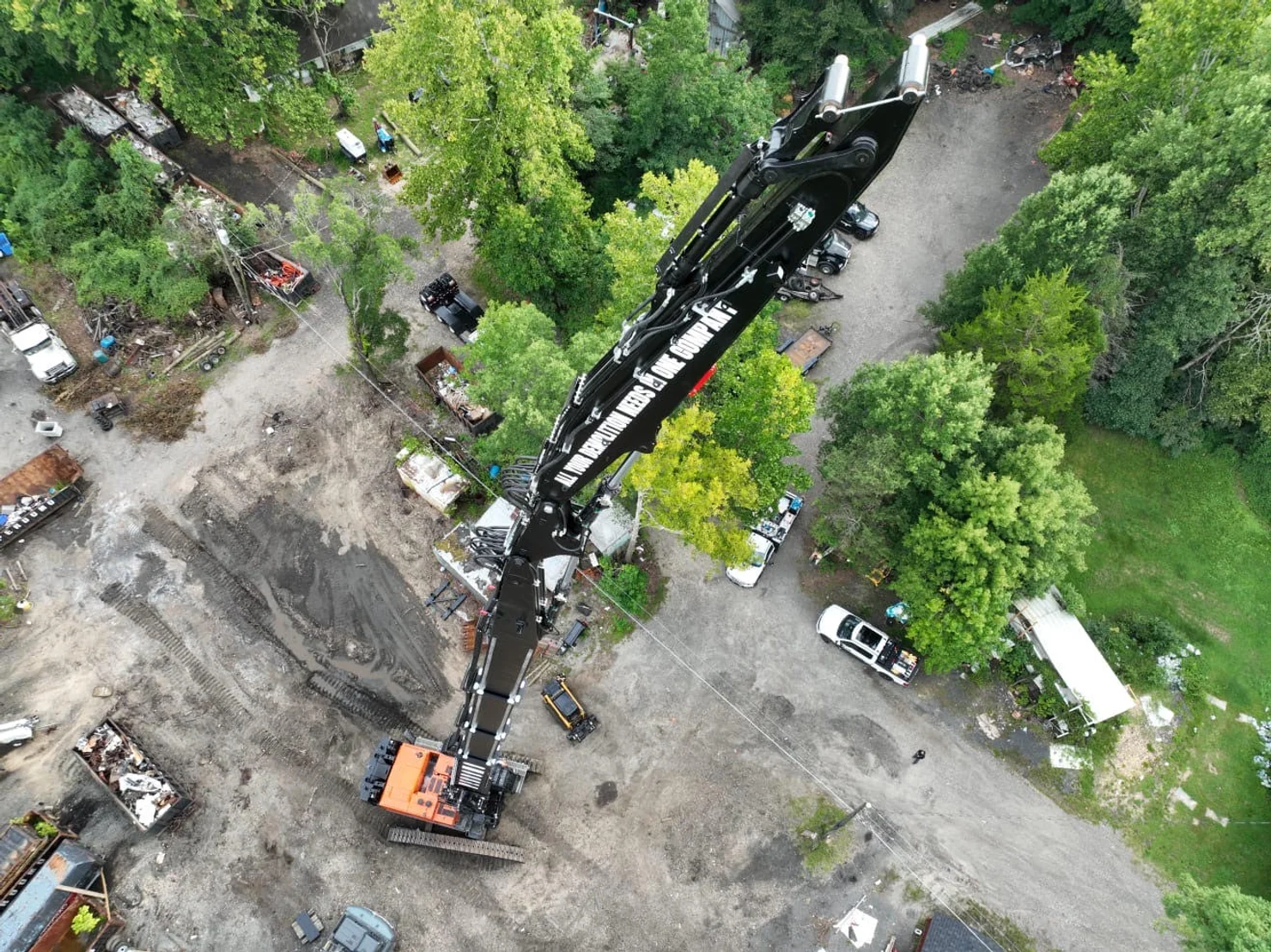
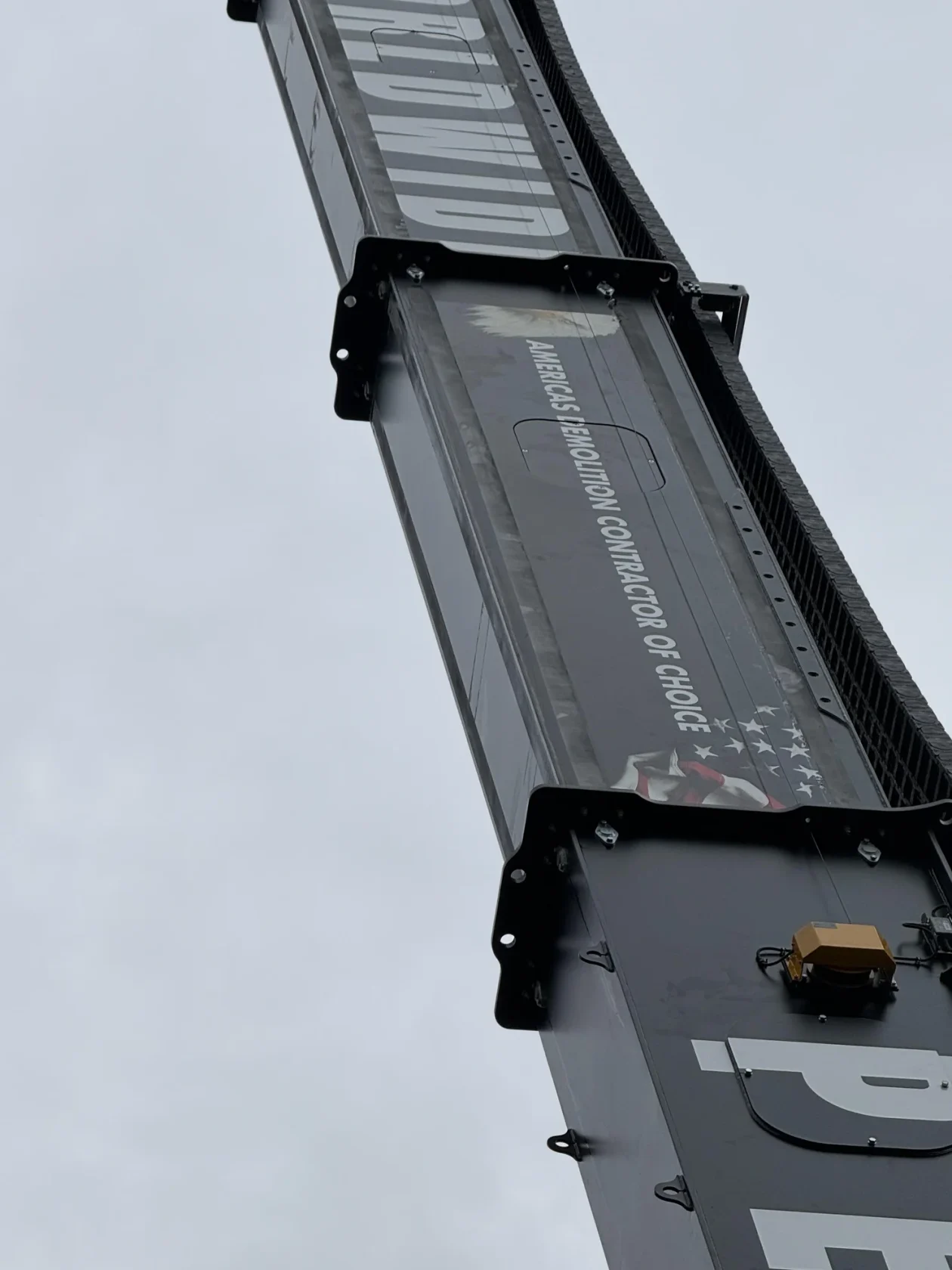
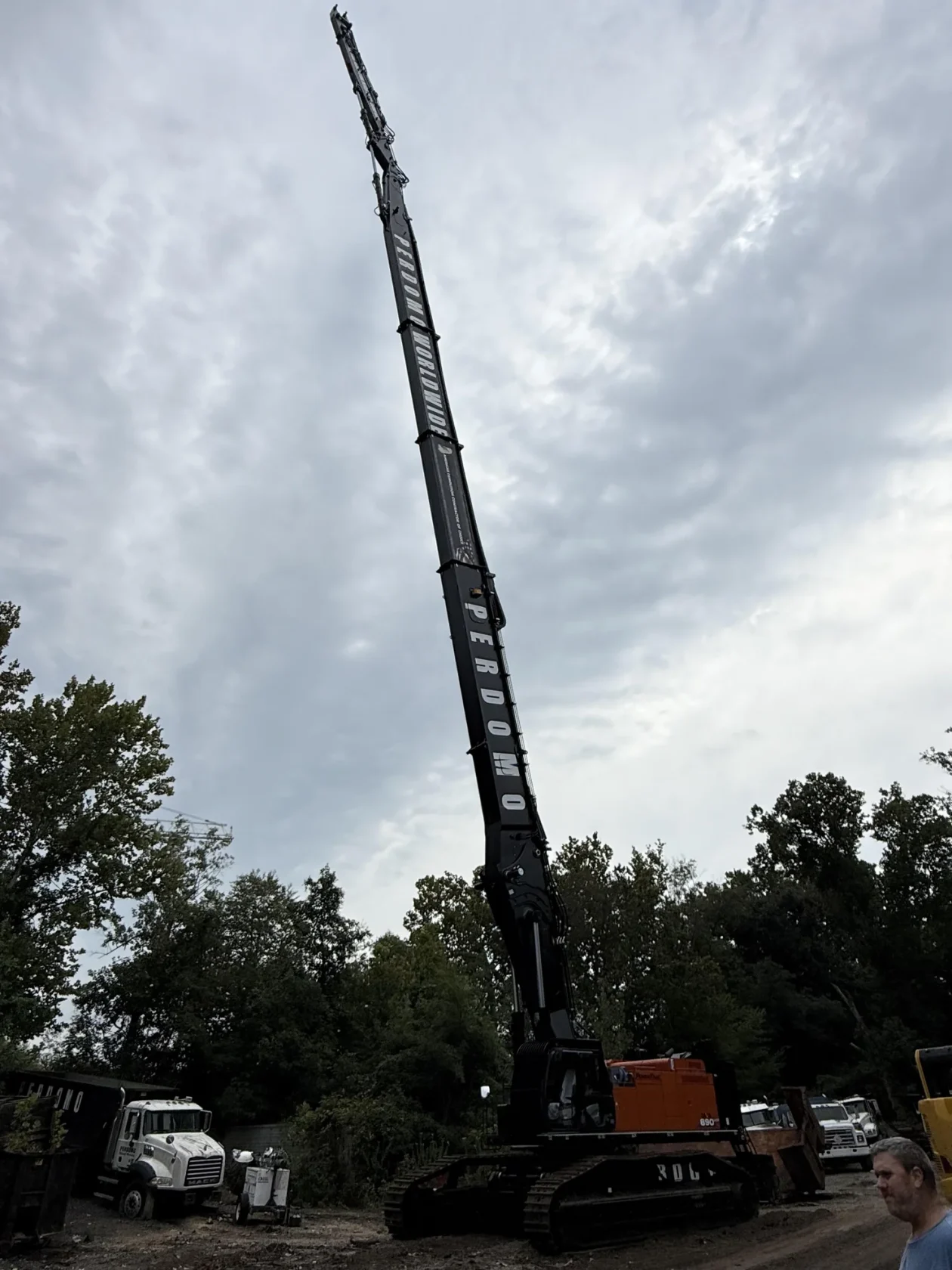
The investment goes beyond maximum reach. Self-erecting technology and reduced transportation requirements can simplify equipment mobilization, while advanced demolition attachments and specialized robotics support controlled structural removal across a range of project conditions.
These capabilities are especially valuable when demolition represents one phase of a larger decommissioning and redevelopment initiative. By coordinating structural dismantling, material processing, site clearing, and subsequent development planning, Perdomo can approach the project as an integrated process rather than a series of disconnected activities.
The company’s broader platform encompasses demolition, environmental remediation, real estate development, and other stages of the property lifecycle. Expanding its specialized equipment fleet strengthens the demolition component of that platform and supports a more coordinated transition from obsolete facilities to sites prepared for future use.
Perdomo’s long-term strategy is focused on building one of North America’s most advanced ultra-high-reach demolition fleets, incorporating next-generation equipment and expanding its capacity to handle structures at exceptional heights.
From Decommissioning to Redevelopment
For property owners managing obsolete industrial facilities, complex commercial properties, and large-scale redevelopment sites, the successful completion of demolition is only one part of the overall objective. The broader goal is to transition the property efficiently and responsibly toward its next use.
Perdomo’s expanding ultra-high-reach fleet strengthens its ability to manage this transition by providing specialized equipment for demanding structural demolition while supporting the coordination of decommissioning, material removal, site preparation, and redevelopment activities.
Through continued investment in advanced machinery, demolition robotics, and integrated project capabilities, Perdomo is expanding its ability to address challenging structures and complex sites with a coordinated, project-specific approach.
The company’s investment in high-reach technology reinforces its commitment to developing the equipment, expertise, and operational capabilities needed to take on increasingly demanding projects and help move properties from decommissioning toward their next chapter.
About Perdomo Worldwide
Perdomo Worldwide is a global leader in energy infrastructure, industrial redevelopment, and environmental risk transfer. Specializing in the acquisition and transformation of distressed or decommissioned assets, Perdomo delivers end-to-end solutions that bring complex projects back to life.
To learn more or follow Perdomo Worldwide, visit www.perdomoworldwide.com.